
Beauty has always asked something of us. Sometimes it asks us to stand before a painting or to listen to an orchestra. And sometimes, unexpectedly, it asks us to reconsider what we thought beauty required in the first place.
Last week, I attended the Paducah Symphony Orchestra’s Spirio Series featuring the Steinway & Sons Spirio—a remarkable high-resolution player piano capable of reproducing a pianist’s performance with breathtaking precision. Every nuance of touch, every dynamic shift, every moment of expression had been captured from a real musician and transferred to the piano.
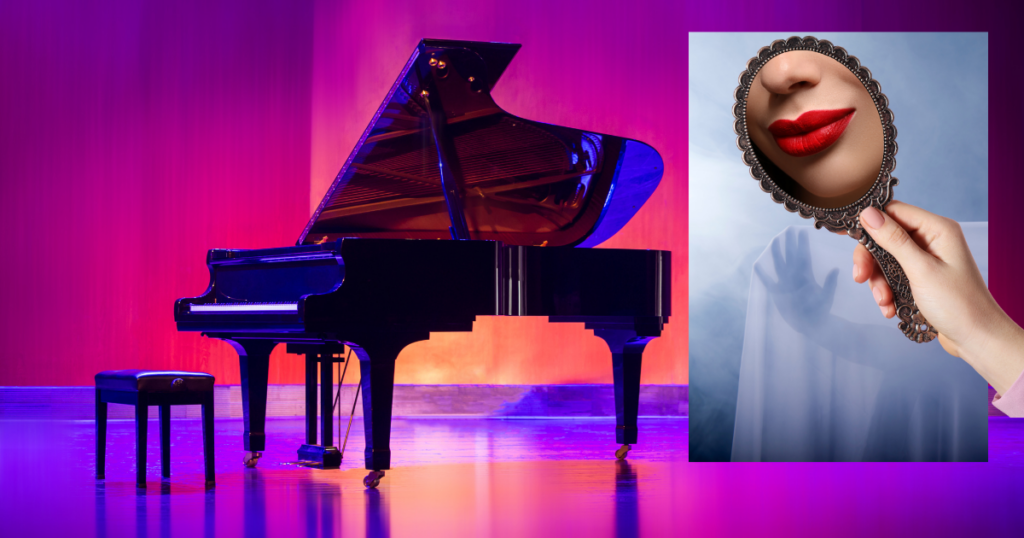
When the performance began, there was no pianist. There was only an empty bench and ivory keys pressing themselves into motion.
My first reaction was something close to a haunted house. There was something unsettling about watching “nothing” perform music. My eyes kept searching for the person responsible, but there was only absence.
The room was filled with beautiful music. The stage was filled with no one.
At first, I thought that absence would define the evening, but instead, it became the invitation. As the performance continued, I realized I wasn’t struggling with what I heard. It was what I couldn’t see.
I discovered that I wasn’t missing the musician as a person. I was missing the visible effort of a human being striving toward beauty. A live performance is more than beautiful sound. It is beautiful labor.
It is watching shoulders rise before a difficult passage. It is hands stretching farther than seems comfortable. It is knowing that every note exists alongside the possibility of the wrong note. Every performance contains risk, and somehow that risk becomes part of its beauty.
The Spirio preserved the artistry. It did not preserve the striving. That distinction was important to me.
At one point I found myself wondering whether I would have experienced the performance differently if I had simply closed my eyes. I think I would have.
I arrived expecting to compare technology against humanity. Instead, I found myself accepting technology on its own terms.
The Spirio is not a replacement for a live pianist any more than photography replaced painting. They inhabit different spaces. They invite different ways of seeing, hearing, and wondering.
One offers the beauty of witnessing creation unfold in real time.
The other offers the beauty of preserving a moment of artistry with astonishing fidelity and allowing that moment to live again. Neither diminishes the other.
They simply ask us to appreciate different kinds of presence.
Perhaps that was the greatest gift of the evening.
The empty bench, which first felt unsettling, eventually became a quiet reminder that beauty is larger than the forms we expect it to take. Sometimes beauty arrives through flesh and bone, trembling with the possibility of imperfection. Sometimes it arrives through craftsmanship and engineering, carrying the touch of someone who is no longer in the room.
The music was real. The artistry was real. The piano was real.
Only the presence had changed.
And maybe that is the question this remarkable instrument leaves us with: not whether technology can replace human beauty, but whether it can reveal new ways of experiencing it.