
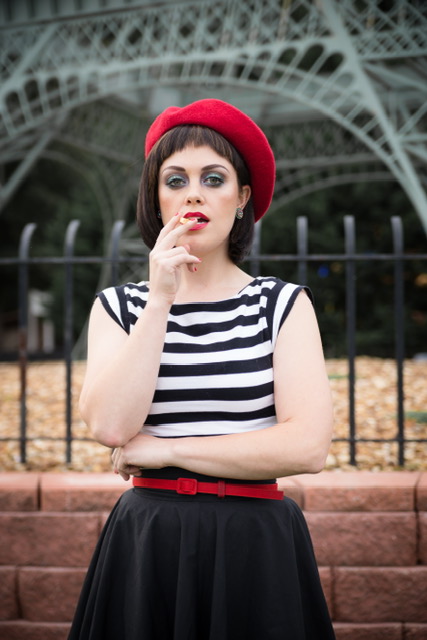
I don’t have a celebratory cigarette. Some people do. They have one after the final show of a tour, defending a dissertation, or finishing a project that consumed years of their life. Or after really good sex! The kind that leaves two people staring at the ceiling, suspended somewhere between laughter and silence, not quite ready to return to the ordinary world.
The cigarette appears as punctuation at the edge of a meaningful moment. I’ve always been fascinated by that. I don’t want the cigarette. I want what the cigarette represents. The celebratory cigarette symbolizes permission. It says: That was something. Stay here for a minute.
Sometimes I even perform the ritual without the cigarette. I will hold a french fry between my fingers and pretend to smoke it, a birthday candle after blowing it out, or some random object that happens to be the right shape. It is “ridiculous”, obviously. A small private theater production with a perplexed audience.
But there is something revealing about the gesture. I want the hand movement, pause, and the exaggerated satisfaction of leaning back as though the moment deserves a soundtrack. It turns out I don’t crave a cigarette. I want the feeling of stepping outside the ordinary timeline to mark a significant moment.
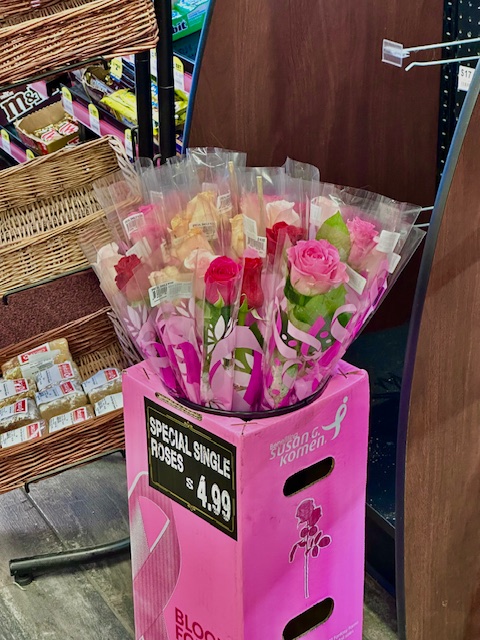
My version is a gas station rose. Not a u-pick experience where I wander through rows of flowers with a basket, selecting the perfect bloom with the sun on my shoulders. Not a rose cut from my own garden, carefully tended and waiting outside my window. Not even a rose from a florist, thoughtfully selected and arranged into an elegant bouquet. A gas station rose.
A flower that has wandered into a place designed for lottery tickets, windshield fluid, and impulse purchases. A rose—the flower we have collectively decided is one of the most romantic and luxurious flowers in existence—reduced to a five-dollar decision made under fluorescent lighting.
And yet, that is what makes it wonderful. The appeal is the convenience and the strange transformation that happens along the way.
The gas station rose is a high-end flower that has been made unserious. It comes wrapped in crackly plastic. It might be dyed a color that does not occur naturally: electric blue, deep black, rainbow. Sometimes it has glitter sprinkled over the petals, as if someone looked at a rose and thought, beautiful, but what if it sparkled?
It is romance with a little bit of tackiness. Luxury with the edges softened. A gas station rose is a meaningful symbol that has been allowed to become slightly ridiculous. For about five dollars after tax, I can purchase something completely unnecessary and briefly make an ordinary day feel ceremonial.
Objectively, it is not the best use of money, but perhaps that is exactly why it works.
The rose is not valuable because it is efficient. It is valuable because it interrupts efficiency.
The gas station rose is not the only way we create these little ceremonies. Beauty has always understood this instinct.
A lipstick can be a practical object. It can complete an outfit, change a face, make someone feel more confident walking into a room. But sometimes the lipstick is not for the lips. Sometimes it is for the mirror.
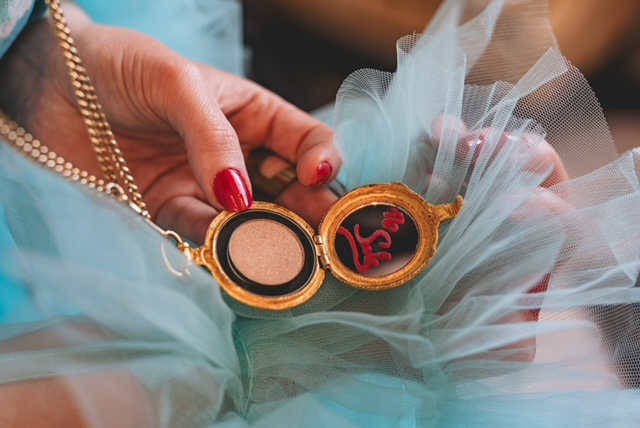
There is something delightfully unnecessary about buying an expensive lipstick and using it to write a message on glass. How wonderful is it to have a little red or pink sentence waiting for you when you come home?
It is not an efficient use of a luxury product. It is almost an insult to the product. It becomes a carefully formulated beauty object, reduced to a temporary note that will be wiped away with glass cleaner.
And yet, that is what makes it beautiful.
We often talk about beauty as though its purpose is improvement: correcting, enhancing, perfecting.
But most of the time true beauty is not about becoming more attractive but becoming more present. A lipstick mark on a mirror is not asking anyone else to admire you. It is a message between you and yourself. It is a tiny, colorful reminder that you were here and that something happened.
That a particular version of you existed in that particular moment. Somewhere along the way, we have become suspicious of anything that cannot defend itself. Every choice must have a reason. Every pleasure must have a benefit. Every habit must improve us.
We have entered an era where we are constantly invited to become better versions of ourselves, and many of those invitations are genuinely worthwhile. Exercise helps. Sleep matters. Nourishment is important. Discipline supports.
But there is a bit of danger in believing that the ideal human being is one who never slips, indulges, wastes, or makes a choice that cannot be defended in a wellness report. A life lived entirely under management eventually starts to feel less like living and more like administration.
Psychology has a term that offers an alternative: psychological flexibility.
It describes the ability to adapt, to experience discomfort without being consumed by it, to change course when necessary, and to pursue what matters without demanding perfection from ourselves.
Research on psychological flexibility has consistently linked it with better mental health outcomes, including greater resilience and lower psychological distress. Separately, research on chronic stress has shown that prolonged psychological strain is associated with meaningful effects on the body, including associations with increased risk for certain immune-related conditions.
The lesson is not that a cigarette is medicine. It is not. Smoking carries health risks, even when it is framed as a ritual.
The lesson is more buried. Humans appear to need some ability to loosen their grip. We are not built only for control. We are built for recovery, adaptation, celebration, and connection.
Perhaps the danger is not the occasional imperfection but in creating a life where imperfection feels like an emergency.
The celebratory cigarette—whether it is an actual cigarette, a gas station rose, a lipstick message on a mirror, a slice of cake for breakfast, or a bottle of champagne opened on a Tuesday—is a reminder that not everything meaningful needs to be optimized.
Some things are valuable precisely because they are unnecessary. The rose will wilt. The cigarette will burn out. The lipstick will be wiped away. The moment will pass.
But for a brief period, something inside us recognizes that a chapter has closed, something has been survived, something has been accomplished, or something beautiful has simply happened.
And we allow ourselves to notice. We do not always need a reward. Sometimes we need a ritual. A small, imperfect ceremony that says: I was here. This mattered.