
One of the more surprising discoveries of visiting the Pacific Northwest has been the diminished status of makeup. People there wear makeup. But it seems to possess less authority than it does elsewhere. It occupies a lower rung in the hierarchy of things worth caring about.
The observation initially seemed trivial. What did it matter, after all, whether people wore less makeup? Yet many important cultural truths first announce themselves through small details. A society reveals itself not only through its laws and institutions, but through the small matters to which it grants prestige. Every place has an exchange rate.
In some cities, appearance functions as a highly liquid currency. Great effort is invested in acquiring and displaying signs of beauty because beauty purchases certain advantages: admiration, belonging, reassurance, perhaps even a measure of safety. We all know this, whether or not we approve of it. Human beings have always been unusually attentive to one another’s surfaces.
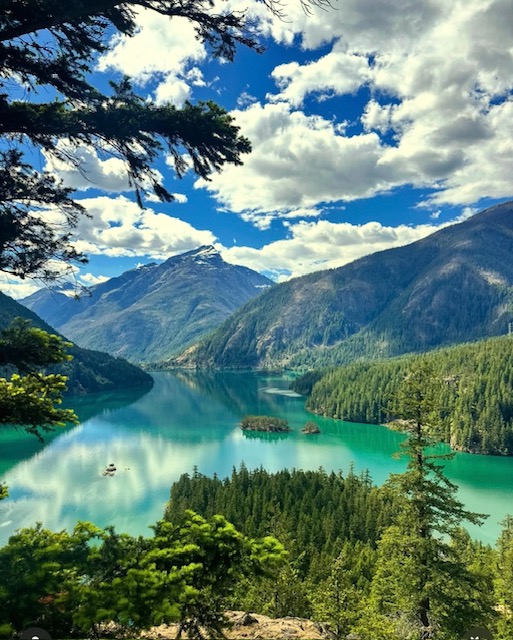
The Pacific Northwest seems to operate according to a different system of value.
Part of the reason may be geographical. It is difficult to maintain a sense of one’s own visual importance when confronted daily by mountains. The comparison is not flattering. The forests possess a confidence that renders many of our anxieties faintly absurd. They have no interest in self-improvement. The coastline is not striving to become more attractive. The water does not wake each morning wondering whether it has aged well. Nature’s beauty is peculiar because it lacks vanity.
This is not to suggest that the natural world is morally superior. Storms and landslides are not known for their compassion. But I find it psychologically helpful to spend time among entities that are entirely indifferent to human status games. Most of us expend a surprising amount of energy imagining how we appear to others. We adjust, refine, conceal, enhance. We become both the performer and the audience of our own lives. Then, occasionally, a landscape interrupts the performance.
Standing beside an expanse of turquoise water, one experiences a rare and welcome demotion. The self becomes less central and questions of attractiveness lose some of their urgency because one encounters beauty on a scale that no longer feels competitive.
Nature can remind us that beauty existed long before we arrived and will continue long after our particular concerns have dissolved. It suggests that our value may not be as tightly linked to our appearance as modern life sometimes encourages us to believe.
There may be another reason appearance seems to carry less weight here. Modern life leaves many of us subtly disregulated. We are overstimulated, hurried, and exposed to a constant stream of comparisons. In such conditions, it is hardly surprising that we become preoccupied with managing our appearance. We are often seeking more than beauty itself. We are seeking reassurance.
A new haircut can feel like a fresh start. A carefully chosen outfit can lend confidence to an uncertain day. A touch of makeup can create a sense of coherence when our inner lives feel fragmented.
There is nothing irrational about any of this. Human beings have always used external means to influence internal states.
Yet nature performs a similar function, and often more effectively.
A walk among evergreens, an hour beside cold water, the sight of distant mountains disappearing into mist—these experiences possess a regulatory quality. They return us, however briefly, to ourselves. The nervous system settles and the mind ceases its frantic scanning. We become less concerned with how we are being perceived and more absorbed in what is actually before us.
Perhaps this is why beauty seems to function differently in places dominated by landscape.
When we are sufficiently nourished by our surroundings, we ask less of adornment.
We no longer need it to reassure us that life is interesting; the coastline has already done that. We no longer need it to create a feeling of vitality; the forest has supplied it. We no longer need it to distract us from ourselves quite so urgently because, somehow, being among trees has made being ourselves feel a little easier.
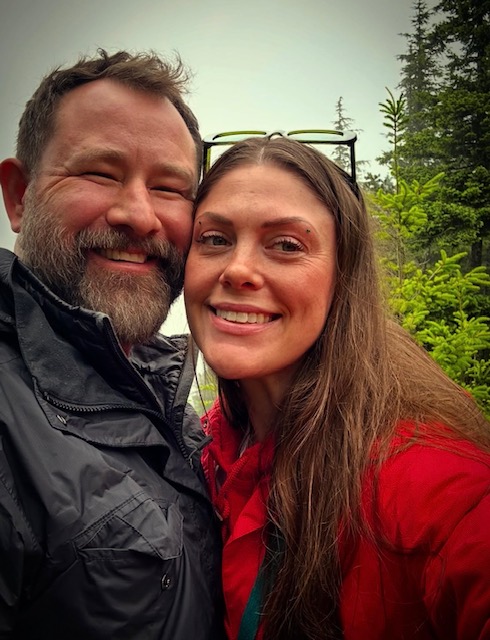
Adornment remains but its role changes. It ceases to be compensation and becomes expression. This realization should, in theory, have cured me of adornment altogether.
When we feel uncertain of our worth, we may ask beauty to perform impossible tasks. We ask it to secure our belonging, establish our significance, and protect us from rejection. It is a great burden to place upon a tube of mascara. Adornment is happiest when relieved of such responsibilities.
A small crystal near the corner of the eye can then become what it was perhaps always meant to be: evidence of delight.
A stick-on gem beside the eye is no longer attempting to solve an existential problem. It is simply participating in beauty. And that feels like a healthier arrangement for everyone involved.
The mountains seem entirely unconcerned by whether anyone finds them beautiful. Curiously, this only makes them more so. Perhaps there is a lesson in that.