
“Please” should be enough.
It is structurally complete—polite, socially sanctioned, and a signal that we understand the boundaries between wanting and taking. And yet, for many of us, it doesn’t feel sufficient. There is a subtle hesitation, a sense that something is missing, as though the request, in its plain form, might not fully land.
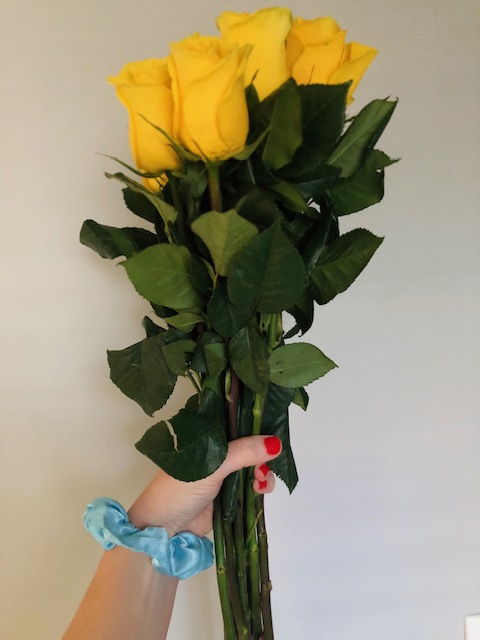
So we add to it. Pretty please.
The addition is curious, not because it clarifies the request, but because it embellishes it. It introduces an aesthetic layer—as if sincerity alone might not persuade, but sincerity made pleasing might.
And beneath that instinct, there is something almost superstitious.
An unspoken belief that if we don’t say it the right way—soft enough, charming enough, pretty enough—it won’t be received in the way we intend. That the outcome is not just dependent on what we are asking, but on how attractively we deliver it. As though the phrase itself carries a kind of luck, tipping the scales in our favor.
Children understand this intuitively. “Please” is compliance. “Pretty please” is hope.
And sometimes, just to be certain, we go even further.
Pretty please… with a cherry on top.
The escalation is almost ritualistic. The cherry—borrowed from the language of desserts, of indulgence, of something already complete made just slightly more desirable—becomes a symbolic excess. It says: I am not just asking. I am offering this to you in its most appealing form.
Historically, “pretty” itself did not always refer strictly to beauty. It once implied something pleasing, clever, agreeable in a smaller, more delicate way. To make something “pretty” was to make it easier to accept, easier to like. The cherry functions similarly—a visual and emotional cue that something is finished, heightened, worthy of attention.
And so the request becomes layered.
There is something revealing in this progression, because it suggests that we do not entirely trust the raw form of our desires. We sense, perhaps correctly, that wanting something plainly may not be enough—that it must be shaped, sweetened, and presented in a way that anticipates resistance.
We learn, early on, to decorate our asks.
And this instinct does not stay confined to language.
It expands into tone, posture, appearance, and the subtle ways we make ourselves more agreeable, more palatable, more likely to be granted access, approval, attention. The phrase becomes a template—an early rehearsal in understanding that presentation can influence outcome.
That beauty, in its broadest sense, persuades.
But persuasion has its own tension.
Because at some point, the question shifts. It is no longer just Will this work? but What am I doing to make it work?
At what point does sincerity become performance?
At what point does politeness become strategy?
At what point does “pretty” stop enhancing—and start compensating?
There is no clean threshold.
Only a growing awareness that the instinct to add—the extra word, the softer tone, the cherry on top—is not neutral. It is learned, practiced, and often rewarded. And because it is rewarded, it becomes difficult to separate what we genuinely want from how we have learned to present that wanting.
Which is why the simplest form—please—can feel strangely exposed.
And perhaps that is what makes it so difficult to use.
Because without the embellishment, we are asking to be met directly—without charm, without cushioning, without the insurance policy of being especially pleasing.
And that raises a quieter, more unsettling question:
If we stopped making our desires prettier—
would they still be granted?