Clarity, we tend to assume, is a technical virtue—something belonging to instruction manuals, contracts, or perhaps the more dutiful corners of communication. It does not, at first glance, seem particularly romantic. And yet, in the intimate theatre of a beauty service—two people, a face, a mirror, a set of subtle expectations—clarity reveals itself as one of the most tender forms of care available to us.
We are, most of us, surprisingly inarticulate about our own faces.
A client sits down during a Private Makeup Lesson and says, “I want something natural but glam.” It sounds reasonable, even familiar. But beneath the phrase lies a small crisis of self-translation. What is “natural”? What is “glam”? Often, what is meant is something far more specific and far more revealing: “I want to feel like myself, but slightly more resolved. I want to be seen, but not exposed. I want to be enhanced, but not misrecognized.”
Without clarity, these desires hover, half-formed, vulnerable to misinterpretation.
The burden, then, falls partly on the client to be honest and to resist the temptation to offer what sounds agreeable, and instead offer what is true. This may come out awkwardly at first: “I don’t like when my skin looks too flat,” or “I always feel strange when my brows are too sharp.” These are not polished statements, but they are invaluable. They are the raw materials of understanding.
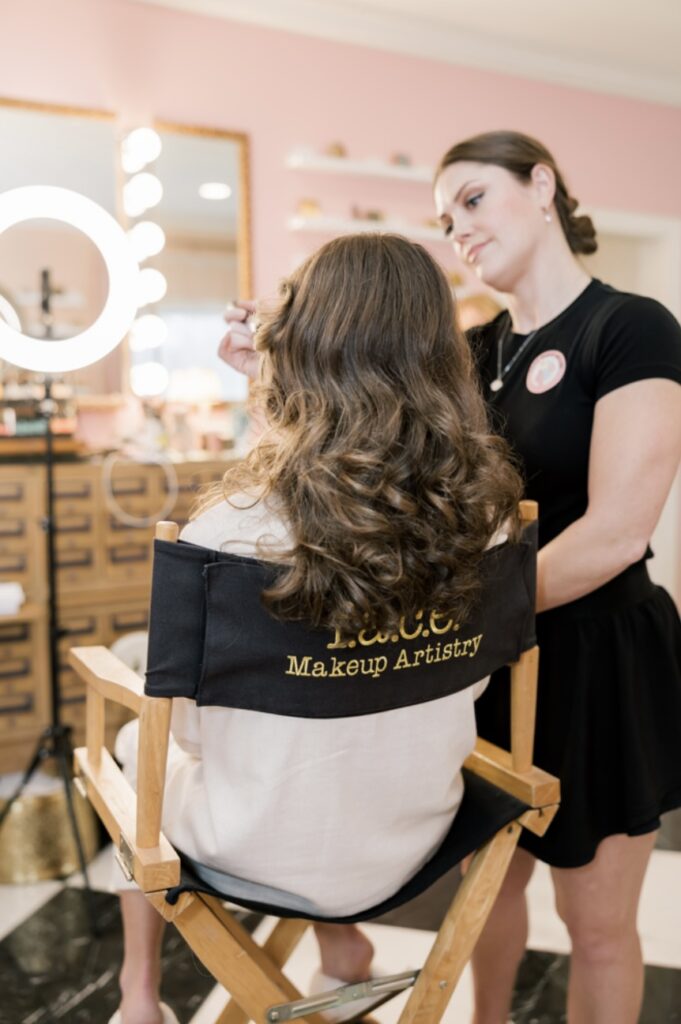
And yet, we would be mistaken to imagine that clarity rests solely with the speaker. The service provider occupies a more complex, and in many ways more demanding, role. They must act as a translator of human ambiguity—a profession for which there is no formal training, and yet constant necessity.
To hear “natural but glam” and respond not with curiosity instead of assumption: “When you say natural, do you mean lighter coverage? And when you say glam, are you thinking more about the eyes?” This is not pedantry. It is, in its own way, a form of emotional intelligence.
For what is at stake is not merely aesthetic satisfaction, but something closer to recognition. To be made up incorrectly is, for many, to feel subtly estranged from oneself—to encounter in the mirror a version that is technically competent, perhaps even beautiful, but fundamentally not quite right.
Clarity guards against this alienation.
It requires, however, a mutual discipline. The client must be willing to reveal—to say, in effect, “This is me, as best as I can explain.” The provider must be willing to refine—to respond, “Let me see if I understand you correctly.” Between these two gestures, something fragile begins to stabilize.
We might say that clarity is the opposite of guessing. And guessing, for all its efficiency, carries a certain arrogance: the belief that we already know, that we need not ask, that approximation is sufficient. But in matters of the face—so bound up with identity, history, and self-perception—approximation can feel like a small betrayal.
There is, too, a broader lesson concealed within these exchanges. Our difficulty with clarity in the makeup chair is not unique. We are similarly vague in love, in friendship, in our private negotiations with ourselves. “I’m fine,” we say, when we are not. “Something feels off,” we offer, when we might instead say, “I feel unseen.” The consequences are familiar: misunderstanding, distance, a lingering sense that something essential has been missed.
To practice clarity, then, is to practice a kind of courage. It asks us to risk being specific, to risk being known in a way that cannot be easily revised or softened. It asks us, too, to extend patience—to ask one more question, to confirm rather than assume, to treat another person’s words not as final, but as the beginning of understanding.
In the end, the magic of clarity is not that it makes things perfect. It is that it makes things possible. It allows two people, however briefly, to meet without distortion. And in a world so often governed by approximation, that is no small achievement.