
There is a brief elevator scene in Mad Men in which a young model explains to Pete Campbell that she was called in for a casting because the team liked her photograph. When she arrived in person, they decided she was not right and sent her home. They never took her photograph.
This is the telling detail. She was dismissed in one medium before the medium she was potentially being hired for was ever allowed to appear.
A photograph is a specific kind of object. It suspends time, flattens space, and depends heavily on light, framing, and stillness. It is not a lesser version of a person, nor a more truthful one. It is simply different. A body, by contrast, reveals itself gradually. It moves, speaks, pauses, occupies space. These are not interchangeable forms of appearance, yet we often behave as though they are.
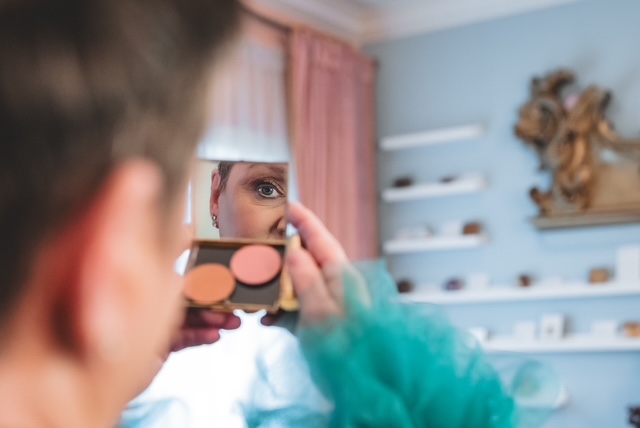
In fashion and cosmetology, this confusion has become routine. Faces that work beautifully on camera are expected to perform the same way in daylight. Makeup designed for studio lighting is evaluated in motion. Bodies meant to be seen in sequence are judged as though they were still images. When disappointment follows, we rarely question the comparison itself.
Something similar now occurs far beyond fashion. We increasingly encounter one another first as profiles—carefully selected images, compressed biographies, moments extracted from context. These representations are useful, even necessary. But they are also highly specific mediums, often asked to stand in for encounters they were never designed to replace.
What stands out in the elevator scene is not that she was rejected, but that the decision preceded the very thing she was there to provide. A person was assessed, dismissed, and sent away before the conditions that justified her presence were even created. The image had already been decided. The photograph no longer needed to be taken.
We do this often, not only with beauty. We allow the most familiar or convenient medium to dominate our judgment, even when it is the least appropriate. We compare across forms that were never meant to compete, and then mistake the resulting discomfort for insight.
Perhaps the problem is not that we expect too much from appearances, but that we ask the wrong ones to decide too early.