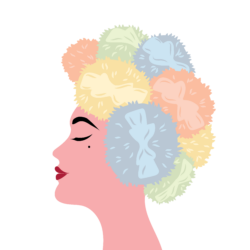
We think beauty is something we have, we are, and we keep.
But in Beauty and the Beast, beauty is something else entirely: A war between two ways of looking.
On one side: Gaston’s gaze.
The kind that freezes beauty in amber so it can be owned. His eyes are a mirror that doesn’t reflect you back — it reflects what you’re worth to him. Under that gaze, beauty is static. It must be preserved, curated, pinned like a butterfly. Your role is to stay unchanged so others can admire you without the discomfort of seeing you grow.
We all know Gaston’s gaze. It lives in Instagram grids, in backhanded “you’ve changed” comments, in the silent panic of watching the skin at your jaw soften with time. It’s the voice that says: Stay the same or lose your value.
On the other side: Belle’s vision.
The kind that doesn’t stop at the surface. She sees beauty as something alive that can shape-shift, deepen, and still remain itself. She looks at the Beast and doesn’t ask him to erase his edges to fit a frame. She lets the mystery breathe.
This gaze is rare in the world and even rarer in the mirror. It’s the one that notices the way laughter lines tell a love story, the way a face changes after you’ve survived something. It asks, What will you become next?
Most of us live in the space between. Some days we see ourselves like Belle does — fluid, evolving, uncontainable. Other days we slip into Gaston’s frame and hold ourselves hostage to a single, frozen image we once loved.
The whole arc of Beauty and the Beast could be rewritten as this battle between two gazes: one that kills beauty by trapping it, and one that lets it live long enough to surprise you.
The question isn’t which gaze others use on you.
It’s which one you choose to turn on yourself.