
Horror films are rarely about monsters. More often, they take ordinary human tendencies and push them to their logical conclusion. The supernatural simply illuminates what was already there.
On its surface, Obsession is a story about a magical wish gone wrong. A young man named Bear longs for his friend Nikki. He discovers the One Wish Willow and wishes for Nikki to love him more than she loves anyone else.
The wish becomes catastrophic.
But the tragedy begins long before the magic.
Bear, Nikki, Sarah, and Ian inhabit a remarkably small world. They work together, spend their free time together, and rarely seem to venture beyond their immediate social circle. In such environments, a crush can acquire disproportionate importance. One person stops being a possibility and becomes the possibility.
Nikki comes to represent more than herself. In Bear’s imagination, she becomes a solution: a route to happiness, fulfilment, and relief from longing.
Meanwhile, Sarah remains in the background. She appears to know Bear in ways Nikki does not. He trusts her enough to tell her about the death of his cat—a small detail that suggests a deeper intimacy than fantasy. Yet because Sarah does not fit the story Bear has constructed, she becomes almost invisible.
Obsession has a peculiar effect on perception. It narrows our vision until we can no longer see what is already present.
The film captures this beautifully through the One Wish Willow.
The instructions are simple: break the willow in half and then state your wish.
Bear does the opposite.
It seems like a minor mistake, but it reveals something fundamental. He is so focused on the outcome that he neglects the process.
How often do we do the same?
We become captivated by an image of the future while paying little attention to the realities required to reach it. Yet the process serves a purpose beyond achieving an outcome. It teaches us whether the outcome deserves our pursuit in the first place.
Had Bear pursued Nikki through ordinary means—conversation, vulnerability, patience, even rejection—he might have discovered that what he wanted was not Nikki herself but relief from loneliness. He might have realized that Sarah offered a different kind of connection. The shortcut deprives him of those discoveries.
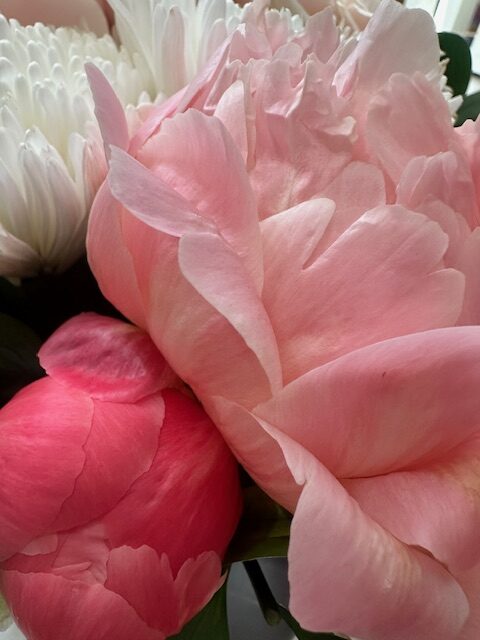
This tendency appears in beauty culture as well. We become enchanted by the promise of transformation while overlooking the complexities that accompany it. We want the after without spending much time with the before.
Yet the before is where understanding happens. It is where we learn whether a transformation reflects our values or merely our anxieties. The process does not simply move us toward a goal; it reveals whether the goal was truly ours to begin with.
The most unsettling aspect of Bear’s wish, however, is the wish itself. Bear wishes for Nikki to love him more than she loves anyone else. At first, it sounds romantic. On closer inspection, it is something else entirely. He does not wish for courage, an opportunity, or mutual understanding. He wishes for Nikki’s feelings to change.
Her autonomy is the hidden sacrifice within the wish.
What Bear seeks is not connection but certainty.
The horror emerges because the wish grants exactly what he asks for. Nikki’s devotion becomes absolute. And absolute devotion becomes monstrous.
The film quietly suggests that our deepest desires are not always our wisest ones.
This is true of beauty as well. Beneath many beauty aspirations lies a hidden hope: that if we looked different, we would finally feel secure, accepted, or chosen.
But appearance cannot control another person’s response any more than a magical willow can manufacture authentic love.
What we often seek is not beauty itself, but certainty.
And certainty is one of the few things life refuses to provide.
The film’s final insight arrives when Nikki returns to herself.
The obsession disappears.
The damage does not.
Bear’s wish may be undone, but Nikki is left carrying the consequences. Her autonomy was taken from her, and no reversal can erase that fact.
Perhaps this is why Obsession lingers in the mind. It is not really about magic. It is about a familiar human temptation: the belief that happiness lies on the other side of one specific person, achievement, or transformation.
The catastrophe begins not with the wish, but with the fixation that precedes it.
The true horror is mistaking possession for love, certainty for intimacy, and desire for wisdom.
The things we long for most intensely are often asking us a question:
Do we want them because they are genuinely good for us or because we have convinced ourselves they will save us?