The modern day beauty industry was built on scaffolding that’s starting to rot: filters, referral codes, marketing gimmicks, and the manufactured scarcity of “limited editions.” It runs on noise and distraction—convincing you that what you have is never enough. But what happens when you strike a match, burn down the problematic parts, and stand in the ashes? What remains?
For me over the past 4 years, the experiment is this: Can a more ethical beauty business exist? One that doesn’t chase algorithms or pay-to-play exposure, but instead grows by something slower, steadier, and more human—word of mouth, lived experiences, and trust?
Word of Mouth Over Manipulation
When your friend swears by a lipstick shade—without earning referral money or tacking on a “link in bio when you shop”—you listen in a way you’d never listen to a pop-up ad. Trust isn’t built through tracking consumer shopping carts or influencers cashing in; it’s built when someone who actually knows you says, “This worked for me. I think it might work for you, too.”
Vintage Over Disposable
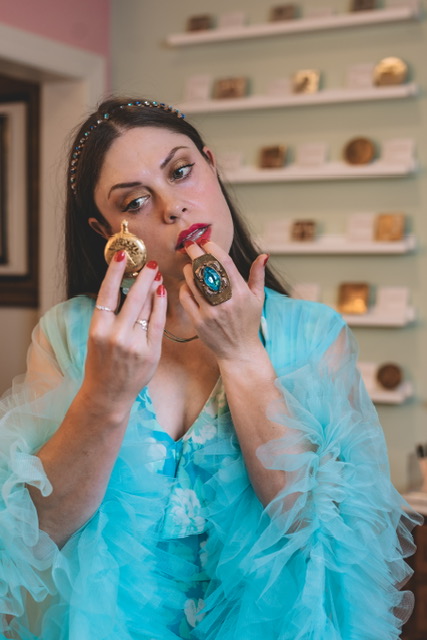
That’s why I love working with refurbished vintage compacts. They aren’t designed to be tossed after a season—they’re built to be refilled, cared for, and passed on. They’re worth more than their price, because they carry both material value and memory. Unlike plastic packaging destined for a landfill, a compact from the 1940s is sustainable, refillable, and still standing decades later. That’s the kind of beauty I want to invest in: something that honors the past while leaving room for the future.
The beauty industry wants you on a hamster wheel of quick hits: a click, a swipe, an algorithmic high. But real beauty work—the kind that transforms how you see yourself—takes more than five seconds of scrolling. It takes conversation. Presence. Sometimes even grief for the versions of yourself you’re leaving behind. I appreciate how far I’ve come in naming these things, and the courage it takes to call myself out to myself. Still, every day I find another layer to burn away—another practice, assumption, or industry standard that doesn’t align with the kind of ethical path I want to walk. There’s always more to uncover, and that’s the work.
Photos: Imagine Images Photo